Water Extraction in Saint Joseph, MO
Standing water in a basement, crawl space, or living area needs to come out fast — our industrial extraction equipment removes it before it soaks deeper into the structure.
Part of Pro St. Joseph Water Damage Restoration — 24/7 restoration dispatch based in Saint Joseph, MO.
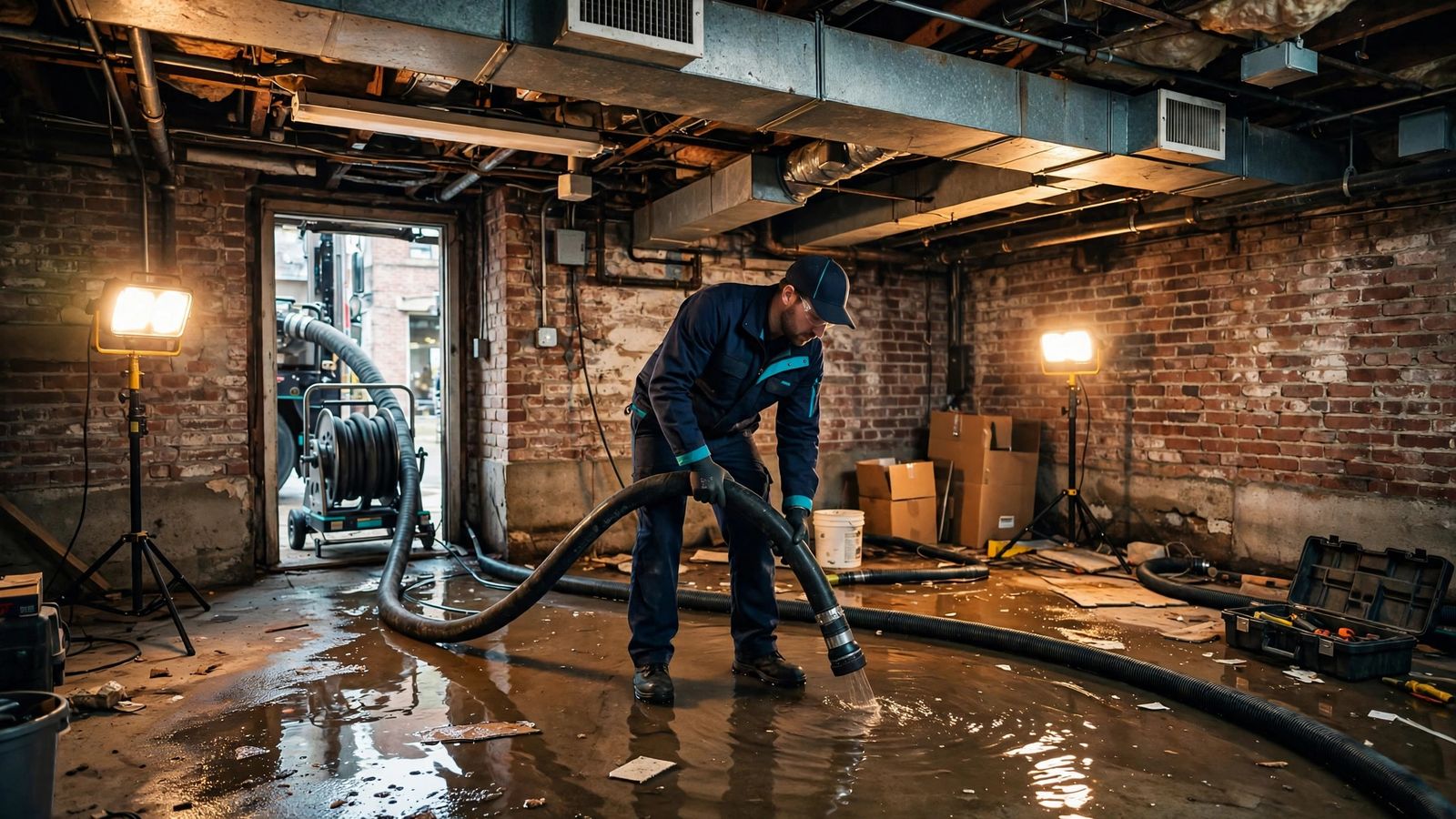
Water extraction is the first step after any flood, burst pipe, or sewer backup — pulling standing water out with truck-mounted pumps and industrial wet vacuums before it spreads further into drywall, subfloor, and framing. We extract across Saint Joseph, Buchanan County, and the surrounding Andrew, DeKalb, and Doniphan County communities 24/7.
When You Need Emergency Water Extraction
Signs you need this
- ✓Visible standing water in a basement, crawl space, or room
- ✓A burst pipe or failed appliance actively flooding the floor
- ✓Floodwater from the Missouri River or heavy spring rain entering the home
- ✓Carpet that squishes underfoot or padding saturated with water
- ✓Water pooling faster than you can keep up with towels or a shop vac
Why it happens
Standing water usually comes from a burst supply line, a failed sump pump during Missouri's heavy spring storms, an overflowing appliance, or river and flash flooding along low-lying parts of Buchanan County — and the faster it's pulled out, the less it costs to dry and repair everything underneath it.
How Professional Water Extraction Actually Works
Truck-mounted vs. portable extraction
Truck-mounted units pull far more vacuum than a portable extractor and can run continuously without overheating, which matters when a basement has several inches of standing water. We bring portable extractors inside for upper floors or tight spaces, then switch to truck-mounted power for bulk removal.
Why "dry to the touch" isn't actually dry
Carpet and subfloor can feel dry on the surface within hours while still holding significant moisture underneath — this is why we use moisture meters and infrared imaging rather than judging by feel, and why a room often needs several more days of air movement after the standing water is gone.
Category of water changes the process
Clean water from a supply line (Category 1) is handled differently than water from a sewage backup or floodwater (Category 3), which is treated as contaminated and requires disposal of porous materials that can't be fully sanitized, not just drying.
Why speed matters more than almost anything else
The IICRC S500 standard — the industry reference for water damage restoration — frames the first 24 to 48 hours as the window before mold growth becomes likely in wet materials. Extraction speed is the single biggest lever on whether a job stays a drying job or becomes a mold remediation job too.
How Water Extraction Works
You call, we answer
A live dispatcher gets your address and a description of the flooding, any hour.
Fast crew dispatch
A crew is routed to you with truck-mounted extraction equipment.
Water removal
Standing water is pumped and vacuumed out, including from carpet, padding, and hard-to-reach corners.
Drying begins
Once bulk water is gone, industrial air movers and dehumidifiers start the drying phase.
Standing Water Right Now? Call Immediately.
Every hour water sits raises the risk of mold and structural damage. Fast extraction, 24/7 across the region.
Extraction pricing is typically driven by how much water, how it's categorized, and how large an area is affected — not a flat per-visit fee.
General ranges
| Item | Typical range |
|---|---|
| Standing water extraction (per room) | $500–$2,000 |
| Whole-basement extraction | $1,000–$4,000+ |
| Category 3 (contaminated) surcharge | Adds 20–40% for disposal & sanitizing |
General industry ranges, not a quote. Your price is set after an on-site assessment.
What drives the price
- ✓How much standing water and how many rooms it reached
- ✓Whether the water is clean, gray, or contaminated (Category 1/2/3)
- ✓Whether carpet padding and other porous materials need disposal
- ✓How long the water sat before extraction began
How Long Extraction Takes
Extraction itself — physically removing standing water — usually takes 1 to 3 hours for a typical residential room once a crew is on-site with equipment. It's the drying phase afterward, not extraction, that takes days: expect industrial air movers and dehumidifiers running for 3 to 5 days after extraction, with moisture checks along the way, before the space is confirmed dry.
Why Extraction Speed Matters More in Saint Joseph
Saint Joseph sits directly on the Missouri River, and Buchanan County has seen major flood events in 1993, 2011, and 2019 — river-adjacent basements and crawl spaces here see standing water more often than inland properties. Our Belt Highway location keeps extraction crews close to both downtown's riverside blocks and the outlying county, which matters because extraction delay is the single biggest driver of whether a job stays simple or turns into mold remediation.
Serving Saint Joseph, Buchanan County, and the surrounding Andrew, DeKalb, and Doniphan County communities
Tap a city below to confirm coverage, or call now for an assessment.
Other Ways We Can Help
Water Extraction Questions, Answered
How fast can you get here for active flooding?
Is it safe to walk through the standing water myself?
What happens to wet carpet and padding?
Get Your Water Extraction Started
One call gets extraction equipment moving — no obligation.
Proudly serving Saint Joseph, Buchanan, Andrew & DeKalb County, and Doniphan County, Kansas as Pro St. Joseph Water Damage Restoration — find us on Google Maps.