
Flood Cleanup in Saint Joseph, MO
Whether it's Missouri River overflow, a flash flood from heavy spring rain, or a neighborhood drainage backup, flood cleanup means extraction, drying, and sanitizing — fast.
Part of Pro St. Joseph Water Damage Restoration — 24/7 restoration dispatch based in Saint Joseph, MO.
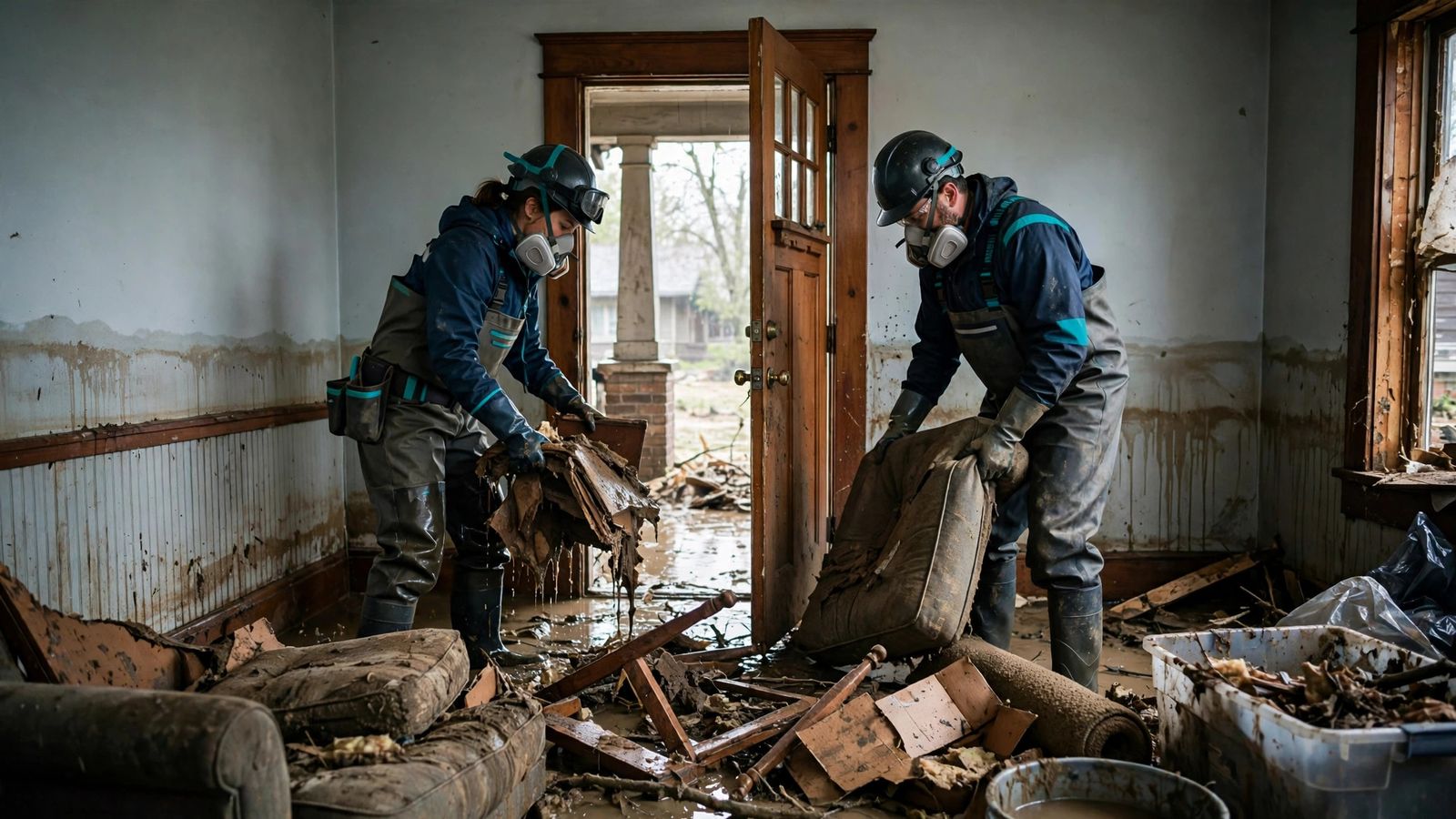
Flood cleanup covers extraction, drying, and sanitizing after Missouri River overflow, flash flooding, or heavy regional rain pushes water into a home or business. We respond across Saint Joseph, Buchanan County, and the surrounding Andrew, DeKalb, and Doniphan County communities 24/7 with a damage assessment before anything is decided.
When You Need Flood Cleanup
Signs you need this
- ✓Floodwater has entered a basement, crawl space, or ground floor
- ✓A low-lying property near the Missouri River or a creek has taken on water
- ✓Street or yard flooding has worked its way into the structure
- ✓Floodwater carries mud, debris, or an unclear source — treat it as contaminated
- ✓Water has been sitting for more than a few hours
Why it happens
Saint Joseph sits directly on the Missouri River, and Buchanan County has seen major flood events in 1993, 2011, and 2019 — heavy spring rain, rapid snowmelt upstream, and river-level rises all push water into low-lying neighborhoods and crawl spaces faster than storm drains can handle it.
What Makes Flood Cleanup Different from a Regular Water Loss
Floodwater is contaminated by default
Unlike a clean supply-line break, river or storm-drain floodwater is classified as Category 3 (grossly contaminated) regardless of how it looks — it can carry agricultural runoff, sewage, and debris. That means PPE for our crew, different disposal rules for soaked materials, and full sanitizing rather than just drying.
Why porous materials usually can't be saved
Carpet, carpet padding, and particleboard that have been in contact with floodwater typically can't be sanitized to a safe standard and need to be removed and disposed of — this is standard IICRC guidance, not us being overly cautious, and it's one of the main reasons flood cleanup costs more than a clean-water loss of the same size.
Documentation matters more for flood claims
Because most standard homeowners policies exclude river flooding (it typically requires separate NFIP flood insurance), we document the water source, height, and duration carefully — that record matters whether you're filing an NFIP claim, a different covered claim (like a sump pump failure during the same storm), or disputing a denial.
How Flood Cleanup Works
You call, we answer
Describe the flooding and its likely source — river, storm drain, or interior failure.
Fast, safe dispatch
A crew with the right protective equipment is routed to you, since floodwater is treated as contaminated.
Extraction and assessment
Water is extracted and the affected area is documented for your records and insurance.
Dry and sanitize
The space is dried, sanitized, and monitored until moisture levels are back to normal.
Flood Water in Your Home? Call Now.
River and flash-flood water is treated as contaminated and needs fast, safe extraction. 24/7 across the region.
Flood cleanup generally costs more than a comparable clean-water loss because of contamination handling and higher disposal volume.
General ranges
| Item | Typical range |
|---|---|
| Flood cleanup, single room | $1,500–$4,000 |
| Flood cleanup, full basement | $3,000–$10,000+ |
| Disposal of contaminated porous materials | $300–$1,500 depending on volume |
General industry ranges, not a quote. Your price is set after an on-site assessment.
What drives the price
- ✓Depth and duration of flooding
- ✓Whether the source was river overflow, storm drain backup, or flash flooding
- ✓How much carpet, padding, and drywall needs removal vs. drying
- ✓Distance from our Belt Highway dispatch point
Flood Cleanup Timeline
Extraction and initial sanitizing typically take a full day for a flooded basement given the PPE and disposal steps involved. Structural drying then runs 3 to 7 days depending on how much material was removed versus dried in place, followed by a final moisture check before any rebuild work starts.
Missouri River Flood Risk in Buchanan County
Buchanan County has experienced three major Missouri River flood events in recent decades — 1993, 2011, and 2019 — each pushing water into low-lying neighborhoods along the river and into creek-adjacent properties well outside the immediate floodplain. Rushville and the river-bottom areas around Elwood, Kansas see this risk most directly, but heavy regional rain can also overwhelm storm drains well into Saint Joseph proper.
Serving Saint Joseph, Buchanan County, and the surrounding Andrew, DeKalb, and Doniphan County communities
Tap a city below to confirm coverage, or call now for an assessment.
Other Ways We Can Help
Flood Cleanup Questions, Answered
Is Missouri River floodwater actually dangerous?
Does standard homeowners insurance cover river flooding?
How do I know if my neighborhood is flood-prone?
Get Your Flood Cleanup Started
Fast, safe extraction — no obligation. Call now.
Proudly serving Saint Joseph, Buchanan, Andrew & DeKalb County, and Doniphan County, Kansas as Pro St. Joseph Water Damage Restoration — find us on Google Maps.