
Basement Mold Cleanup in Saint Joseph, MO
Basements are the most common place we find mold across Saint Joseph — groundwater seepage, past flooding, and limited airflow all combine to feed it.
Part of Pro St. Joseph Water Damage Restoration — 24/7 restoration dispatch based in Saint Joseph, MO.
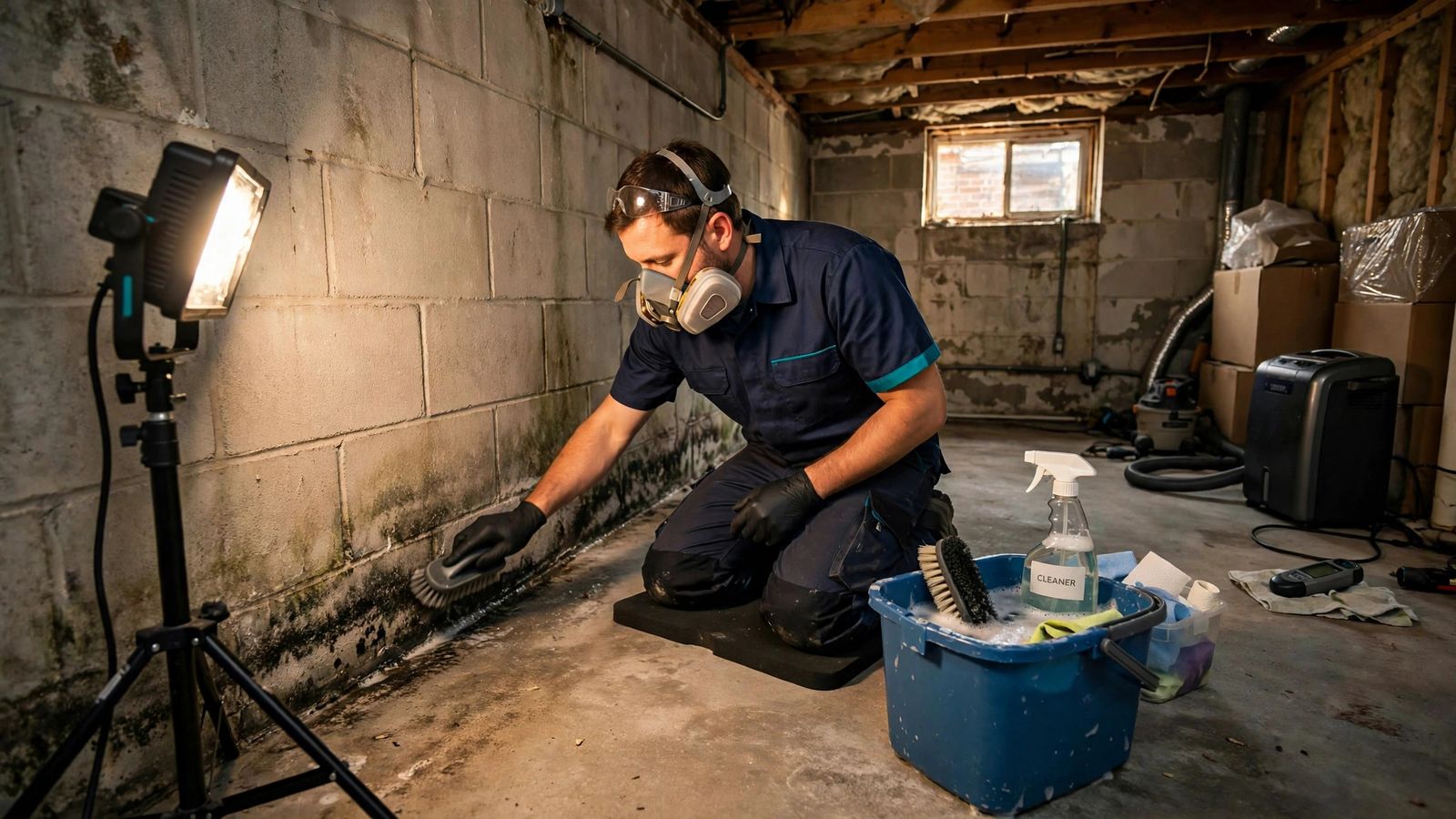
Basement mold cleanup addresses growth driven by groundwater seepage, past flooding, or limited airflow — the most common mold scenario we see across Buchanan County's older foundations. We contain and remove growth across Saint Joseph, Buchanan County, and the surrounding Andrew, DeKalb, and Doniphan County communities with a damage assessment.
Signs of Basement Mold
Signs you need this
- ✓A musty smell as soon as you walk downstairs
- ✓Visible spotting on foundation walls, framing, or stored items
- ✓A past basement flood or seepage issue that wasn't fully dried
- ✓Condensation on basement walls or pipes during humid months
- ✓Allergy symptoms that worsen in the basement
Why it happens
Many Saint Joseph basements see groundwater seepage through aging foundations, especially during heavy spring rain, and combined with limited airflow and Missouri's humid summers, that moisture is one of the most reliable mold drivers we encounter in the region.
Why Basements Are Mold-Prone Even Without Visible Flooding
Chronic humidity, not just standing water
A basement doesn't need to flood to grow mold — sustained humidity above roughly 60%, common in unconditioned Missouri basements during summer, is enough to support mold growth on organic materials like wood framing, cardboard storage boxes, and drywall paper facing.
Where it hides
Basement mold often starts behind stored items, inside wall cavities near the floor (where seepage is most common), or on the underside of carpet in finished basements — areas that don't get looked at regularly, which is why a musty smell is often the first clue before visible growth.
The dehumidification connection
Remediation addresses existing growth, but ongoing prevention in a basement usually requires a permanent or seasonal dehumidification solution — we'll flag this as a follow-up recommendation when a basement's humidity levels suggest it'll recur without one.
How Basement Mold Cleanup Works
Inspection
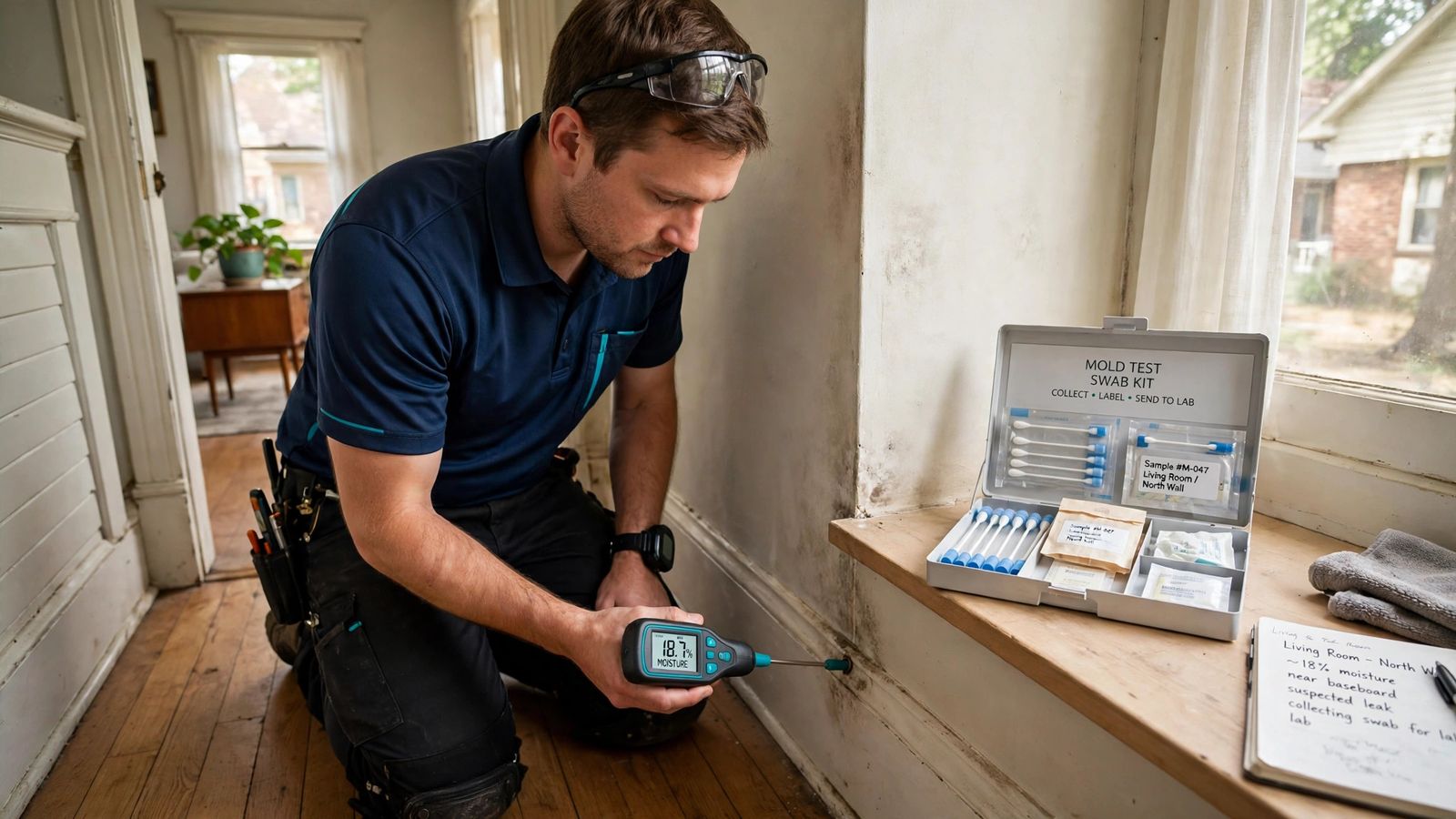
We inspect the full basement, including behind stored items, for growth and the moisture source.
Containment
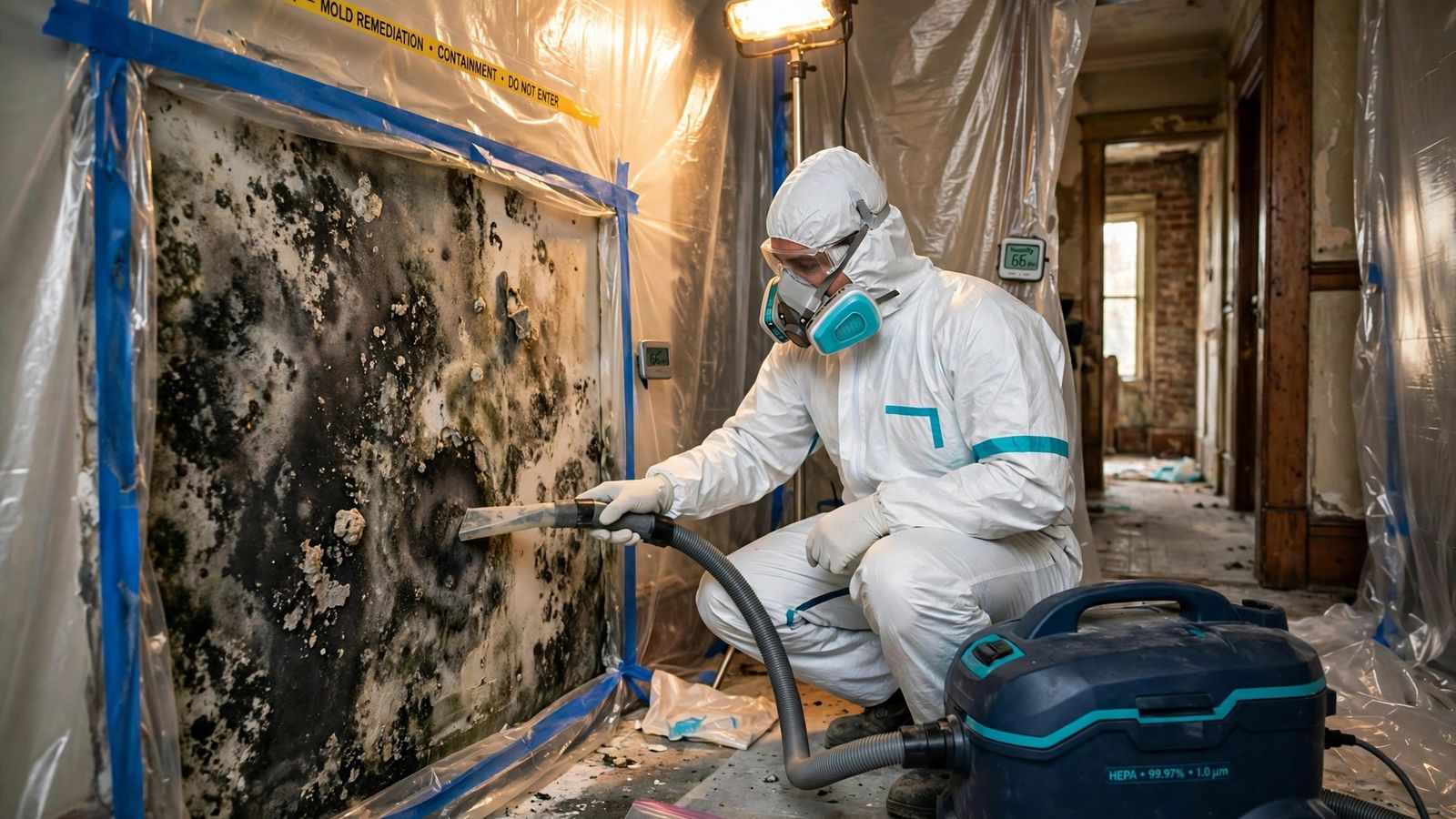
The area is contained to prevent spores spreading to the rest of the home.
Removal
Mold-affected materials are removed and surfaces are treated.
Moisture fix guidance
We flag seepage, drainage, or ventilation issues that need addressing to prevent recurrence.
Basement Mold? Call for Cleanup.
Contained removal before it spreads further. 24/7 dispatch across the region.
Basement mold cleanup cost depends on finished vs. unfinished space and affected area.
General ranges
| Item | Typical range |
|---|---|
| Unfinished basement, localized treatment | $500–$1,800 |
| Finished basement (includes drywall/flooring) | $2,000–$6,000 |
| Dehumidification system (prevention) | $800–$2,000 |
General industry ranges, not a quote. Your price is set after an on-site assessment.
What drives the price
- ✓Finished vs. unfinished space
- ✓Square footage affected
- ✓Whether drywall/carpet removal is needed
- ✓Source of chronic humidity
Basement Mold Cleanup Timeline
Localized unfinished-basement treatment typically takes 1 to 2 days. Finished basement remediation involving drywall and flooring removal usually runs 3 to 5 days including drying time before rebuild work begins.
Basement Mold Risk Along the River Corridor
Basements in river-adjacent neighborhoods and older Buchanan County construction without modern drain tile systems see elevated basement humidity more consistently than newer builds, making this one of our most common mold calls across the service area.
Serving Saint Joseph, Buchanan County, and the surrounding Andrew, DeKalb, and Doniphan County communities
Tap a city below to confirm coverage, or call now for an assessment.
Other Ways We Can Help
Basement Mold Questions, Answered
Why does my basement always smell musty?
Should I throw away mold-affected items stored in the basement?
Can a dehumidifier prevent basement mold?
Get Your Basement Mold Assessed
Damage assessment, 24/7 across the region. Call now.
Proudly serving Saint Joseph, Buchanan, Andrew & DeKalb County, and Doniphan County, Kansas as Pro St. Joseph Water Damage Restoration — find us on Google Maps.